Is that water from your geyser's overflow pipe normal?
A drip from your geyser's overflow pipe can be normal or a warning. You can tell which yourself, calmly and tidily, before you call anyone.

By Zaid Petersen, Owner and master plumber
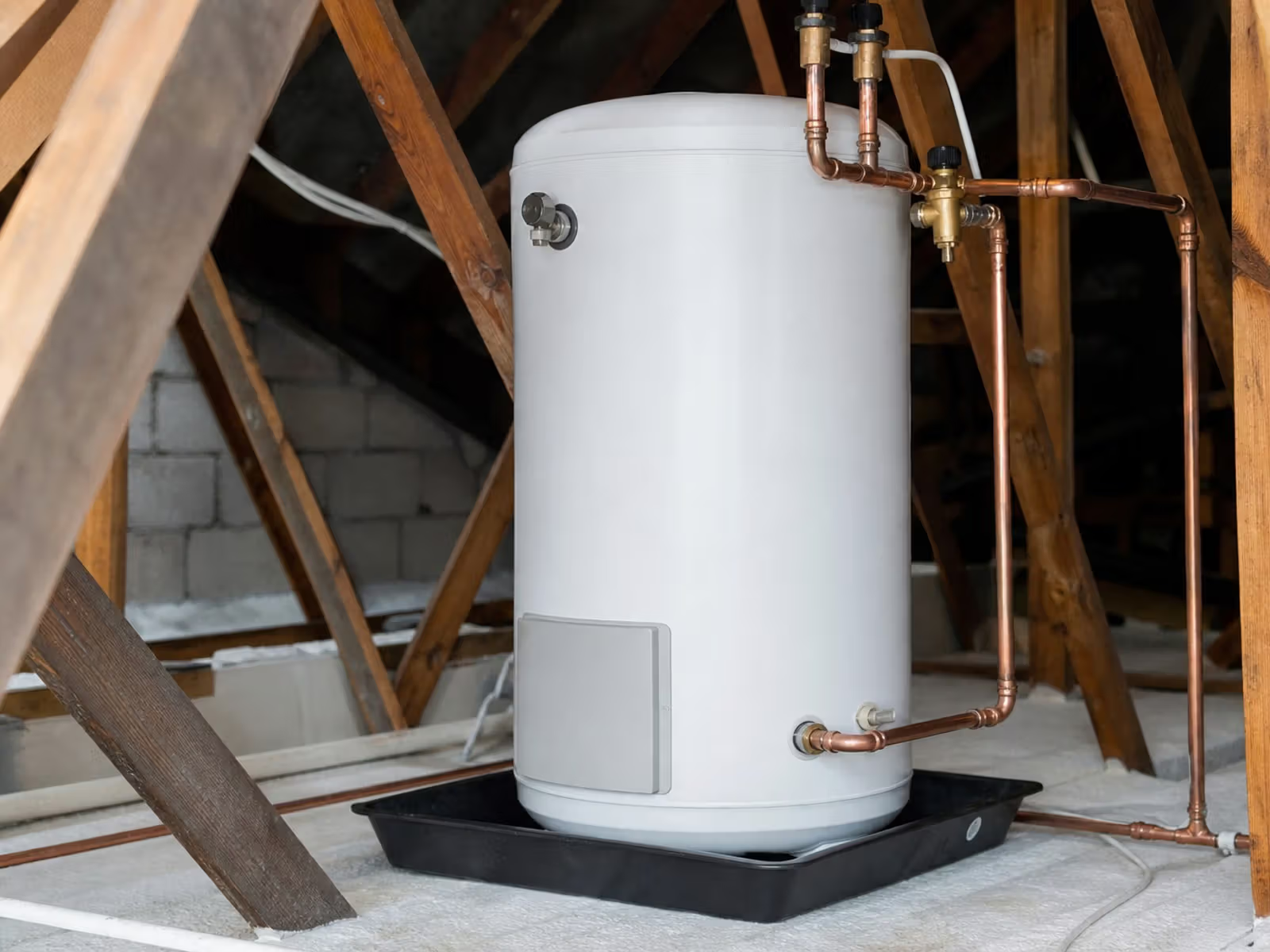
Switch the geyser off at the distribution board and close the cold feed stopcock if the water keeps running. Put a bucket under the pipe and leave the overflow open. A few drops that stop once the water heats are usually normal. Water that runs all day, or a wet patch that keeps growing, points to a faulty part and needs a plumber.
- Watch how much water comes out and whether it only drips while the geyser is heating or keeps running between heating cycles, because a drip that only appears while the geyser heats is usually expansion, while steady dripping or flow needs a closer look at the valve or pressure.
- A steady flow that does not stop is a fault.
- Photograph the geyser and any wet patch before you call.
How to tell a normal drip from a fault
With the photos done, you can read the drip itself. A slow drip now and then is often normal. When your geyser heats water, the water expands. That expansion pushes the relief valve open, so it lets a little out and the tank does not build up pressure. You might see a few drops after the geyser kicks in, then nothing.
But what counts as a fault? A few minutes at the pipe rarely tells the whole story. The discharge changes with the heating cycle, the water pressure and how much hot water the house has used that day. A drip you can count, spaced out, is usually fine. A steady trickle that does not stop, or water that pours out, is not.
Timing is worth watching too. A healthy geyser drips a little as it reheats, usually in the morning or evening. Water running all day points to a part that has failed. So does a wet patch spreading on your ceiling in Fish Hoek or Lakeside.
The short answer: count the drops and clock the time. That simple watch-and-check tells you whether to relax or to call someone in.
What causes water to come out of the overflow
So you know where to point first. Most steady overflow comes from three parts: the expansion-relief valve, the thermostat or the pressure control valve. Each one sends water down the same pipe. The pipe alone cannot tell you which one is failing.
Start with the valve. It wears out. Grit from your water settles under the seat. Once it cannot seal, it drips all day instead of only when the water heats. In older far-south homes the valve is often the original, years past its best.
A stuck thermostat is the next suspect. When it fails to switch off, the water overheats and keeps expanding. That extra water has nowhere to go but out the overflow. You might notice your hot tap runs scalding, then the pipe runs all day.
Pressure matters too. If the mains pressure into your home climbs too high, the pressure control valve pushes the excess out so your tank does not strain. The valve is doing its job. It still leaves water on the ground that should not be there. Klipspringer Plumbing checks all three parts in a geyser repair, including the element, thermostat, valve and pressure, before we quote. Knowing the likely cause tells you which steps to take first. Here they are, in order. If the geyser keeps overflowing, a repair is the next step and Geyser repairs in Cape Town's far south, quoted before we fix explains how we handle it. For wider background, see capetown.gov.za.
Steps to take before the plumber arrives
- Switch off the geyser at the distribution board. This stops it heating more water and buys you time.
- Close the stopcock on the cold feed if the water keeps pouring. This cuts the supply to the tank.
- Put a bucket or towel under the overflow pipe, outside and inside, to catch the drips and keep the floor dry.
- Leave the overflow pipe open. Never cap it or plug it, because it is releasing pressure.
- Take a photo of the geyser and any leak or wet patch, so you have a clear record.
- Note when the water runs and how fast. A plumber can read that detail before arriving. For further reading, see Avoid the ‘geyser nightmare’ (Home Owners, Advice).
What to ask for in writing before any work starts
Sometimes we still need to see the problem on site before we give you a reliable price. Any diagnostic fee gets agreed with you first. A photo on WhatsApp is often enough for a plumber to tell you what is probably wrong. And what it will cost. You get that in writing. No new charges turn up once they reach your kitchen.
Then ask for the final invoice to match the quote you agreed. One bill. One number. Before and after photos of the work. For a landlord, that paperwork is what you hand your insurer or your owner. You don't have to drive to the property yourself. The Geyser Health Check is a once-a-year visit that ends in a short written report with photos, sent to you on WhatsApp.
Ask which parts the price turns on. A burnt element or a stuck thermostat costs far less than a full replacement. An honest plumber will tell you when a repair holds. Klipspringer Plumbing quotes before the fix and sends one invoice that matches. That is the record you want in your inbox. A written diagnosis and quote give you the facts to decide your next step. Calmly, with water off the floor.

Frequently asked questions

Can I still use my hot water heater if it's leaking?
Switch it off at the distribution board first, then decide whether to use it again. A drip that stops once the water is hot is different from a pipe that runs all day and the geyser should stay off until someone has checked which one you have. Running a faulty geyser can push the water level and temperature higher, so there is no point testing it to find out.
How do I fix a leaking water pipe without replacing the whole line?
A patch or a section repair can hold on a short, easy-to-reach length of pipe. Whether it holds depends on the material, the age of the pipe and where the leak sits. A plumber who has seen the pipe in person can say whether a repair will last or whether the run needs replacing.
Will I be overcharged for something simple, like a tap or small repair?
The price depends on the fault, the part and how long the job takes to reach and fix. Ask for the likely fault and a price in writing before anyone comes out and ask which part the price turns on. That gives you a number to hold the final invoice against.
Will they actually turn up when they say they will, or will I be left waiting and chasing them?
Ask the plumber to note the arrival window on your booking, so you have a record of what was agreed, so you both have a record of it. A confirmed window gives you something to check against if the visit slips. Keep a record of the time you were promised so you can raise it straight away.
Can I get the paperwork my insurer needs for a geyser claim?
Ask for a written diagnosis, the quote and one final invoice that matches it. Photos taken before and after the work add a clear record. Your insurer will want to see when the fault started and what was done to fix it, so keep every document together in one place.
Will I be hit with an inflated invoice for work that doesn't even solve the problem?
Check that the final invoice lists the same work and parts as the quote you agreed. Once the geyser has refilled, watch it under pressure to make sure the repair holds. If the drip returns, the fault was not fixed and you can ask the plumber to show you what they found.
Explore more
-
Understand your geyser before it costs you a surprise
What your geyser does, why it fails and which fix you actually need.
Ready When You Are
For more on this, see Geyser. If you would like to take this further, Geyser repairs is the place to start.