
Know when your geyser needs a service, not a replacement
You've lived with that geyser for years. You don't know when it last got checked. Here's how to tell a routine service apart from a real problem, so there are no surprises.

By Zaid Petersen, Owner and master plumber
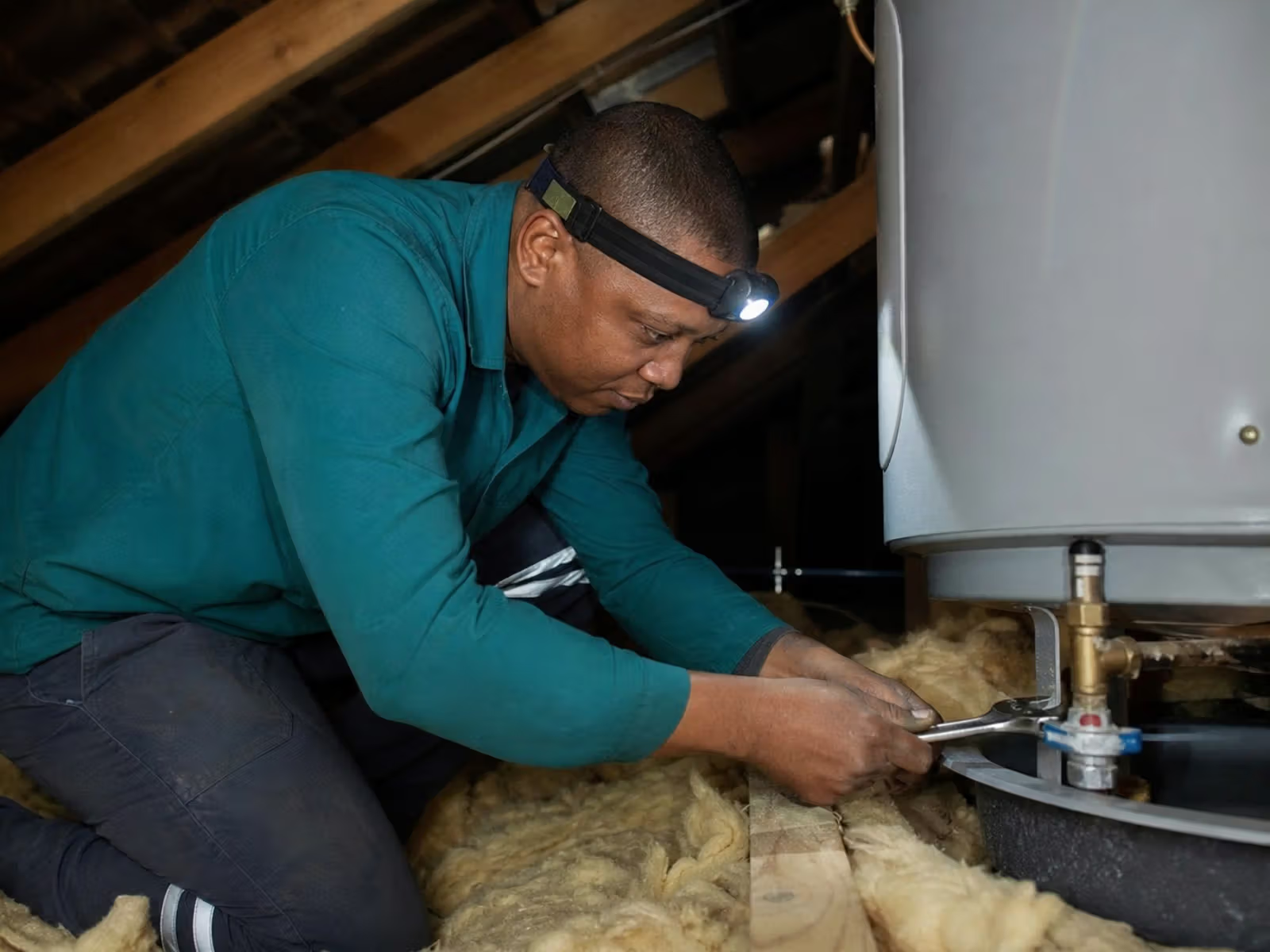
A geyser should get a proper check every two years in hard-water areas, or every three to four years where the water is kinder but that number moves depending on your water, your household and the geyser's age. Hard water wears the anode rod faster, so a geyser on bad water may need checking sooner than the two-year mark. A geyser working hard in a full house cycles more than one in a flat with light use, so it wears faster too. Past a certain age, the sensible move is to have it looked at and judged on its own condition rather than trust a fixed number.
What a routine geyser service actually checks
So what does a service actually cover? It is a short list of checks that keep your geyser safe and working. A plumber looks at the parts that wear out, the parts that can fail quietly and the parts that keep the pressure safe.
The first part is the anode rod. It sits inside the tank and corrodes on purpose, so the steel tank doesn't. Once the rod is eaten away, the tank starts rusting from the inside. A service checks how much of that rod is left.
Next comes the pressure-relief valve. It lets water escape when the tank heats up and pressure climbs. A stuck valve means pressure has nowhere to go. That's how a tank splits. A plumber tests it and makes sure it still opens and seals.
The rest is quick. A check of the thermostat setting, a look at the element, a drain of the sediment that settles at the bottom and a look over the connections for any damp. These are the baseline checks every geyser needs.
How water quality and daily use change the interval
So how often should you book one? Every two years is a recognised recommendation where the water is hard or poor-quality. Three to four years is often enough where the water is good, particularly in hard-water areas. That number is a starting point, not a law. Your own geyser's condition matters more than the date on the calendar.
Water quality is the biggest reason the interval shifts. Harder water leaves more scale and eats the anode rod faster. A geyser on the same supply as a neighbour can still wear differently. It depends on how hot it runs and how often. Two houses on the same street in Fish Hoek can need very different schedules.
Daily use moves the number too. A geyser feeding a full house in Tokai, heating and cooling several times a day, works harder than one in a flat where a single person showers once. More heating cycles mean more stress on the element and the valve. Harder-working geysers need checking sooner.
Age is the third thing to weigh. A geyser that's sat quiet in the ceiling for twenty years is past the point where a fixed interval tells you much. At that age, the sensible move is to have someone look at it. Let them put their hands on it and tell you what shape it's in, rather than trust a number. For wider background, see Maintaining your water heater (portland.gov).
The steps a plumber follows during a service
- Switch off the power and the water supply to the geyser, then let it cool.
- Drain the tank to clear the sediment settled at the bottom.
- Remove and inspect the anode rod and replace it if it's worn down.
- Check the element for scale and damage and clean or replace it if needed.
- Test the pressure-relief valve to confirm it opens and seals properly.
- Check the thermostat setting and the connections for leaks or damp.
- Refill the tank, restore the power and test that it heats and holds pressure.
Signs your geyser needs more than a routine service
A refill and a test only help a heater that still has good years left. Some signs mean the problem has moved past a routine check. The clearest is rusty or brown water from the hot tap. That colour means the inside of the tank is corroding. No service fixes a tank that's already rusting through.
A leak is the next signal, but not every leak means the same thing. A dripping relief valve is a cheap part and a simple swap. Water coming from the tank itself is different. A corroded tank needs replacing, which costs more. Knowing which one you're facing saves you a wasted call-out.
A photo earns its keep here. If you send Klipspringer Plumbing a photo of the leak or the drip on WhatsApp, they can tell you what it is and roughly what it costs before anyone drives out. A drip at the valve and a split in the tank look different. Seeing it first means you're not guessing.
Other warning signs are worth knowing. Banging or rumbling from the tank points to heavy sediment. Water that never gets properly hot points to a failing element or thermostat. None of these wait. The sooner you know which side of the line you're on, a routine service or a real repair, the fewer surprises land in your lap. For further reading, see Water heater repairs and maintenance (mn.gov).

Frequently asked questions

How long should a geyser actually last?
Most geysers run for about eight to twelve years as their typical service life. Good water, a lower thermostat setting and regular checks stretch that. A geyser that's never been looked at tends to fall short of that age, not because the brand is bad but because small problems like sediment or a worn anode rod get left to carry on until the tank pays for it.
Is it cheaper to leave your geyser on, or switch it off between uses?
Leaving it on all day costs more over a month than switching it off when you're not using hot water, since it keeps reheating to cover losses. But switching it off and on a lot also puts more strain on the element and the thermostat, which are two of the parts a service checks anyway. A timer is the middle ground most households land on, so the tank isn't heating water nobody's using.
Could I end up with a bill that doesn't even fix the problem?
That happens when nobody checks what's actually wrong before work starts, usually because someone guessed over the phone. The fix is simple: get the tank looked at in person before any part gets swapped. A dripping valve and a corroding tank look similar from the outside but need completely different work, so the diagnosis has to come first.
Will I get charged extra for something small, like a tap washer?
What drives the cost on a small job like that is mostly the part itself and whether anything around it, like a corroded fitting, needs attention too. The way to get a real number is to have someone look at it or send a photo of the exact spot that's leaking, so we can see whether it's a washer or a damaged valve seat, since both start as a drip but aren't the same job.
Will the plumber rush through the job because there's another one booked after mine?
A proper geyser service has a set list of checks, the anode rod, the valve, the element, the sediment and none of those take long to do properly. Rushing shows up afterwards, usually as a valve that still sticks or sediment left in the tank. Ask what was checked and what was found. A plumber who can tell you plainly didn't skip steps.
Will someone actually turn up when they say they will?
That's worth asking before you book, not after you've waited in all morning. A plumber who confirms the time and keeps you posted if anything shifts is easier to trust than one who just says 'sometime today'. It's a fair question to put to anyone before they're on your property.
Ready when you are
If you would like to take this further, Geyser servicing is the place to start.