
Know if roots are blocking your drain without digging up the garden
A slow drain that keeps coming back might be tree roots. Or it might be something simpler. Here's how to tell, before you dig, if you own an older far-south home.

By Zaid Petersen, Owner and master plumber
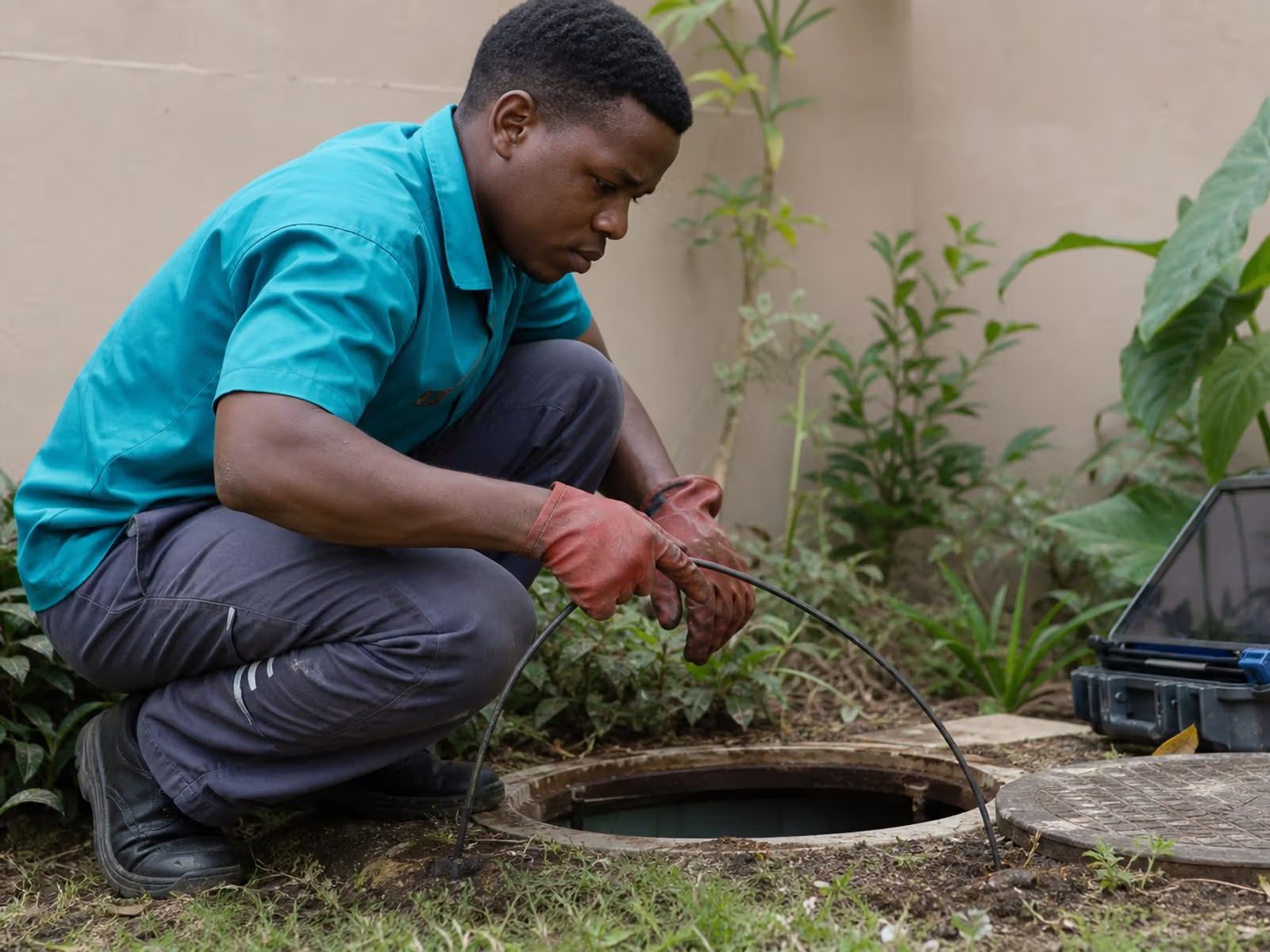
You can't be sure just by looking at a tree near the pipe. Roots only get in through an existing crack or loose joint, so the tree is never proof on its own, the pipe damage has to come first.
- A blockage that clears, then returns within a week or two
- Gurgling or slow drainage across more than one fixture at once
- A patch of grass above the line that stays wet or unusually green
- Standing water or visible roots when you check the inspection chamber
- A camera inspection confirming the root, the crack and how far down it sits
Common blockage causes that have nothing to do with tree roots
Most blocked drains in older homes have nothing to do with roots at all. Before you blame the oak out front, run through the everyday causes first. They are cheaper to fix and far more common.
Fat and oil top the list. You pour it down warm and it cools in the pipe, where it sets hard against the walls. Build-up like that narrows the line over months until the water backs up. A kitchen sink that drains slower every week usually points here, not to a garden.
Then there are the things that simply should not go down. Wet wipes, cotton buds and nappies snag on the smallest rough patch and gather around it. Hair does the same in a bathroom line. A single clump rarely stops the flow. But it catches the next bit and the next.
Old galvanised pipe is the quiet one. In a pre-1980 house the inside of the metal rusts and flakes, so the bore shrinks from the inside out. The pipe looks fine from the outside while the opening closes to the width of a pencil. Rule these out and you are left looking at the tree in the garden, wondering if that is your answer.
Why a tree nearby doesn't prove roots are to blame
A big tree near your drain line proves nothing on its own. Roots go looking for water and they are good at finding it, but they cannot push through a sound pipe. The pipe has to give them a way in first.
That way in is usually a crack or a loose joint. Clay sewer lines, common under far-south homes in Lakeside and Fish Hoek, shift over decades as the ground moves. A hairline crack lets a thread of moisture seep out. The root finds that damp patch and only then does it work its way inside. So the root is the symptom. The crack came first.
The tree alone tells you so little. Picture two houses on the same street, same tree species, same distance from the line. One has roots in the pipe and one does not, because one pipe cracked and the other held. Being close raises the odds. It settles nothing.
Standing next to the tree cannot answer it, so you need a way to actually check. The signs your sewer line has tree roots show up in a pattern, not in a single clue. For wider background, see Prevent blocked sewers (City of Cape Town).
Steps to work out if roots are actually blocking your drain
- Track how the blockage behaves over time. Roots clear for a week or two after a plunge or a rod, then the drain backs up again. A one-off blockage that clears and stays clear is almost never roots.
- Listen and watch after a flush. A gurgle from the drain, or a toilet that empties slowly every single time, points to a line that is partly choked rather than fully blocked.
- Check which fixtures are affected. If more than one drain plays up at once, a basin, a shower and a toilet together, the trouble sits in the shared line underground, not in one fixture's own waste pipe.
- Look for a soggy or unusually green patch of lawn above the pipe run. A cracked line feeding roots also leaks water, so the grass there grows faster and stays wet.
- Lift the lid on your inspection chamber and look inside after it has been running slow. Standing water or visible root threads in the chamber tell you more than any guess from the surface.
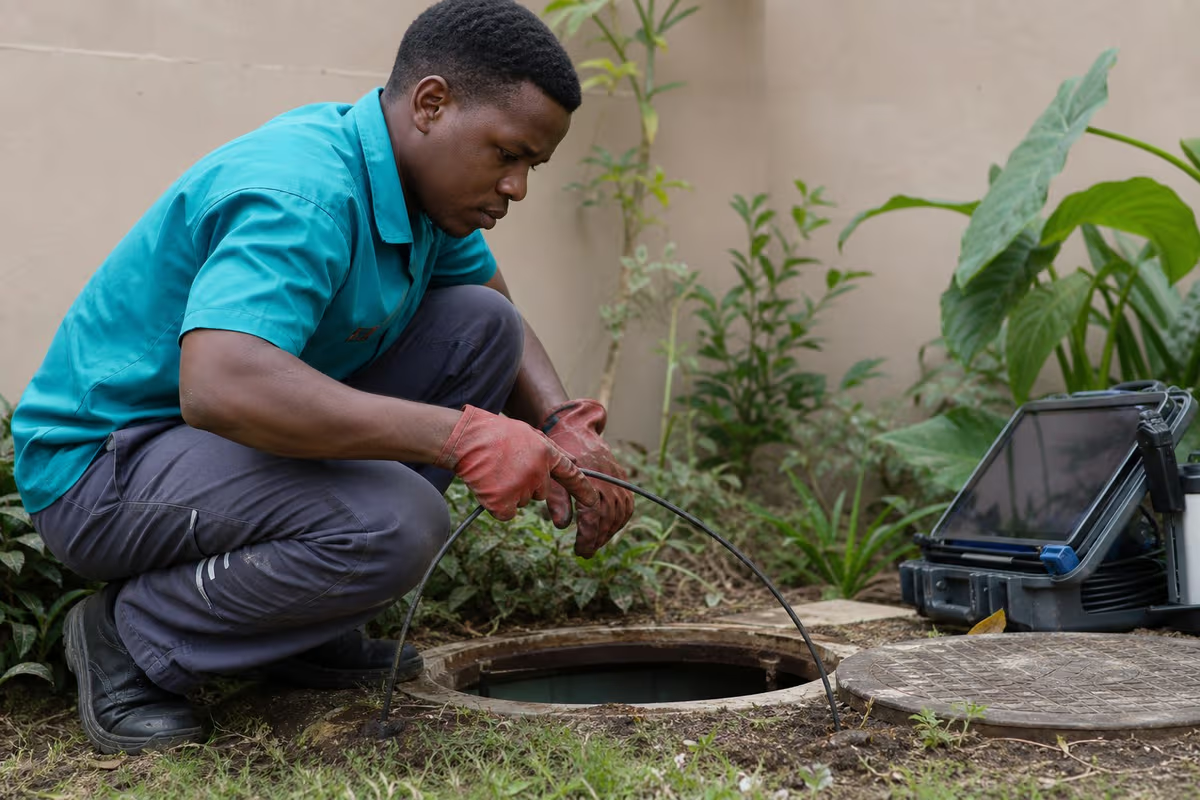
- Confirm it with a drain camera inspection rather than digging to look. The camera feeds down the line through an existing access point and shows the root, the crack or the sagging pipe live on screen, so you know the cause before anyone lifts a slab.
- Once you have confirmed roots are involved, the next worry is who has to sort it out.
Whose job it is: your pipe or the City's line
Here is the good news: the owner question has a clear answer. The line inside your boundary is yours. From the house to the connection point at the edge of your property, that pipe and its upkeep sit with you, the owner. Blockages in the street or on public land should be reported to the City of Cape Town's Technical Operations Centre.
So your boundary decides your first call. Roots in the pipe under your own garden are a private job. A plumber is who you phone. A blockage or collapse in the municipal main is one you log with the City.
Knowing which side the fault sits on saves you time and money. If the whole street is backing up, the cause is likely past your boundary. The City carries it. If it is only your drain, start at your own inspection chamber and work in from there. Settle whose pipe it is first. Then you spend your next rand in the right place.
Frequently asked questions

What actually gets rid of tree roots once they're in the pipe?
A plumber clears the root mass with a cutting tool run through the line, then checks the crack or joint that let the root in in the first place. Clearing the root without looking at the crack just invites it back.
If roots do get cleared out, how soon before they're back?
It depends on the crack, not the tree. A small hairline joint can regrow root threads within months, while a wider repair gives you years before anything finds its way back in.
How can I stop tree roots getting into my sewer line again?
You fix the entry point, not the tree. Once the crack or loose joint is sealed or replaced, there's no damp seam left for a root to chase, so the roots stop coming even with the tree still standing there.
If I call someone out, will they rush off to the next job and leave the problem half fixed?
A proper job means finding the actual crack or joint, not just clearing the clog and driving off. If the root is cut out but the opening that let it in is never found, you're just booking the next call-out.
Will I get overcharged for something that turns out to be small?
Honestly, a lot of blocked drains turn out to be fat, wipes or old galvanised pipe rather than roots at all, so the fair approach is to check the simple causes first before anyone talks about bigger work.
Will I end up with a big bill for work that doesn't even fix the blockage?
That's the whole reason to confirm the cause before any digging starts. Seeing the actual root, crack or sagging pipe on a camera first means the work done after matches what's really wrong, not a guess.
Ready when you are
If you would like to take this further, Drain camera inspection is the place to start.