
Spot a hidden water leak before the bill shocks you
A free 15-minute test tells you if water is running behind your walls. Here's how to check before you call anyone, especially if you own one of the older far-south houses.

By Zaid Petersen, Owner and master plumber
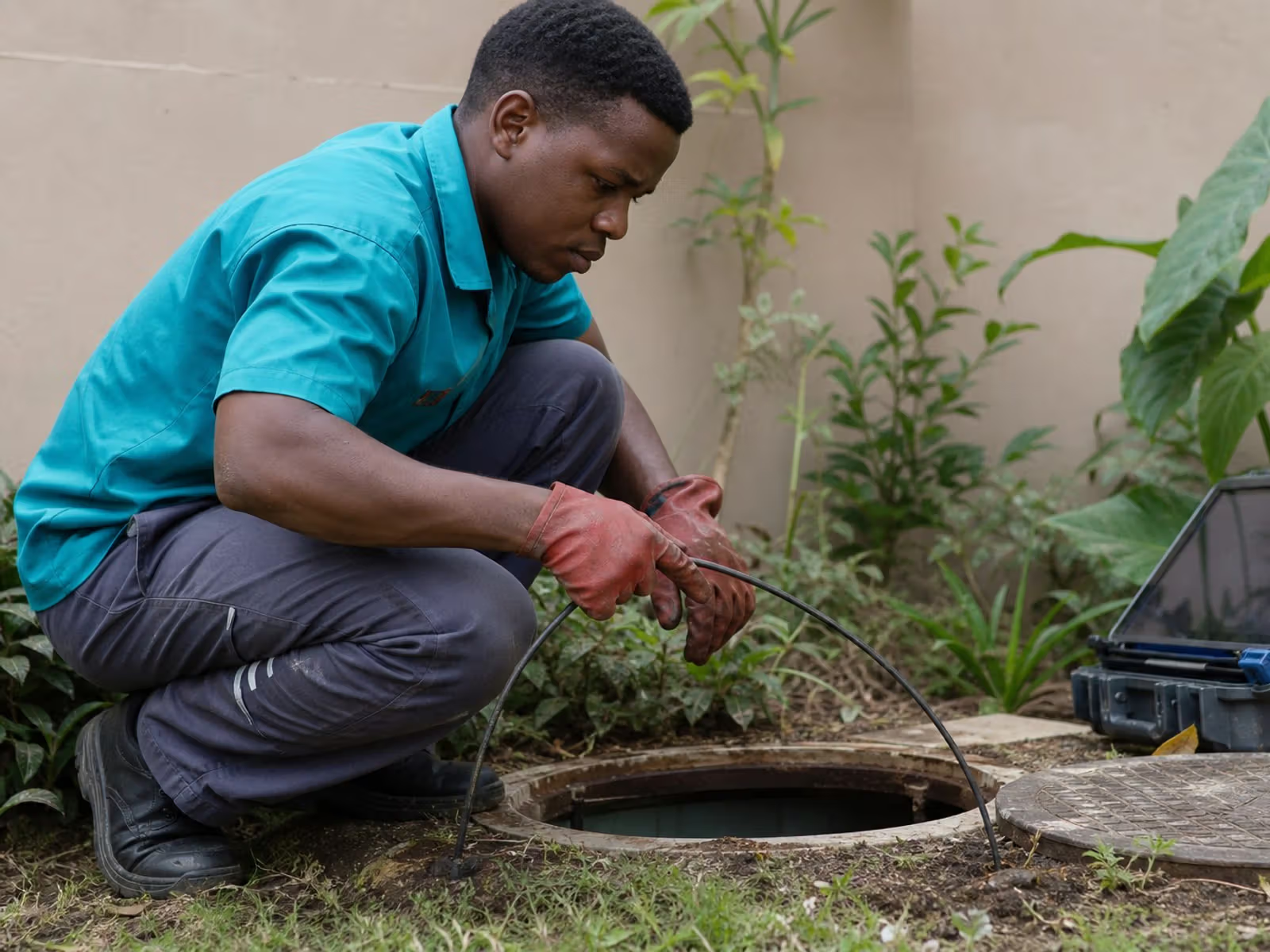
You confirm a hidden leak by shutting off every tap and anything that uses water, then watching your water meter for 15 minutes with nothing running. If the dial still moves, water is escaping somewhere in the house. If it stays still, there's no active leak right now. This simple check costs nothing and tells you more than a water bill or a usage alert ever can, because it shows water moving in real time with every tap closed.
The warning signs your home is hiding a leak
A water bill that jumped with nothing to explain it is the clearest sign. You washed no extra loads. No one moved in. Yet the number climbed anyway.
The bill is the first clue, but the house gives you others. A soft or bubbling patch of paint. A musty smell near a skirting board. A patch of wall that feels damp when you press it. In an older Muizenberg or Fish Hoek home the pipes are often galvanised and tired, so these signs turn up more than you'd like.
Sometimes there's nothing to see at all. You hear nothing. You see nothing. The water keeps running behind the wall or under the slab and the only proof is the bill. If you want to go deeper on reading these early signs, our guide to finding a water leak walks through them.
Spotting a sign is one thing. Proving it is another and for that you don't need a plumber yet.
The 15-minute water meter test you can run yourself
- Turn off every tap inside and outside the house, checking the kitchen, the bathrooms and the garden taps.
- Switch off anything that draws water on its own, like a washing machine, a dishwasher or an irrigation timer.
- Find your water meter. It usually sits near the boundary, in a box set into the ground by the kerb.
- Write down the reading, or take a photo of the dials on your phone.
- Wait 15 minutes and use no water at all during this time, not even a quick hand rinse.
- Read the meter again and compare it to your first reading.
- If the number moved while every tap was shut, water is escaping somewhere but if it held still, you have no active leak right now.
What a City of Cape Town usage alert actually tells you
A City of Cape Town usage alert tells you about unusual water use at your property, like a sudden spike or water running all night. That's all it confirms. It flags an unusual flow, not a leak you can point to.
The alert and the meter test answer different questions. The alert says your numbers look high this month. The test says water is moving right now, with every tap closed. One is a flag raised after the fact. The other is proof you can read with your own eyes.
So treat the alert as a prompt, not a verdict. A guest staying over, a filled pool or a few hot weeks can all push your usage up without a single dripping pipe. Run the 15-minute test before you assume the worst. If the meter still creeps with everything off, the alert and your own check now agree and you know the problem is real.
Whose leak it is: yours to fix or the City's
So whose leak is it? The meter marks the line. Water escaping on your side, between it and your house, is yours to fix. A leak before the meter, on the City's side, is the City's to repair.
Start by shutting off your water at the stopcock. Do this before anything else. With the house isolated, watch the meter. Still turning with your supply closed off? The leak sits between the meter and the stopcock, or on the City's side. Stops turning? The trouble is inside your own pipes.
For a leak on your side, there's no one to report it to but yourself. So the next step is tracing where it runs. Check the meter first. Then isolate sections of the house one at a time. At home you're mostly limited to your eyes, your ears and the meter. That's often enough to confirm a leak. It's not always enough to pinpoint it inside a wall.
For a leak on the City's side, log it with them. They repair the pipe that belongs to them. Either way, you now know which conversation to start. That beats standing over a rising bill with no idea where the water went. For wider background, see Find and fix leaks (capetown.gov.za).

Frequently asked questions

Will you actually turn up when you say you will?
That's a fair thing to want to know once you've confirmed a leak. Once you've got your meter readings and know there's a real problem, the next step is finding someone who sticks to the time they give you, so you're not standing around waiting with water running somewhere in the house.
Could I end up paying for work that still doesn't fix the leak?
It happens and it's why the meter test matters before you call anyone. If you've confirmed the leak yourself and can say where it sits, on your side or the City's, whoever you call has less guessing to do and less chance of fixing the wrong thing.
Will the job get rushed because you're already thinking about the next one?
A leak behind a wall or under a slab can take time to trace properly. Someone moving too fast is more likely to miss it, so a careful check matters more than a quick one.
Will I be overcharged for something small, like a tap?
A dripping tap and a hidden leak behind a wall are two different jobs with two different amounts of work. Knowing which one you actually have, from your own meter test, helps you ask the right questions before any work starts.
Can I get paperwork sorted for my insurance claim, not just a repair?
Insurers usually want proof of what was found and what was done, not just a repaired pipe. Photos of the damage and a clear note of the cause are worth asking for, whoever ends up doing the work.
If I call for help, will I actually hear back?
That's the real worry once you've found a leak and know it needs sorting. A quick reply matters more when water is still moving somewhere in your house, so it's worth asking upfront how fast someone usually calls back.
Ready when you are
For more on this, see Finding a water leak. If you would like to talk it through, get in touch.
About the author
Related articles
-
Plumbing checks before buying a house in Cape Town
What a plumbing check sees on the day, and what it can't reach
Read the guide -
What is the most common cause of a dripping faucet
Why your tap drips and which worn part is really to blame
Read the guide