
Smelly kitchen sink, no blockage? Find the cause before you spend
A kitchen sink that smells but still drains fine usually points to the trap, the venting or the waste pipe. Here is how to check first, calmly and tidily.

By Zaid Petersen, Owner and master plumber
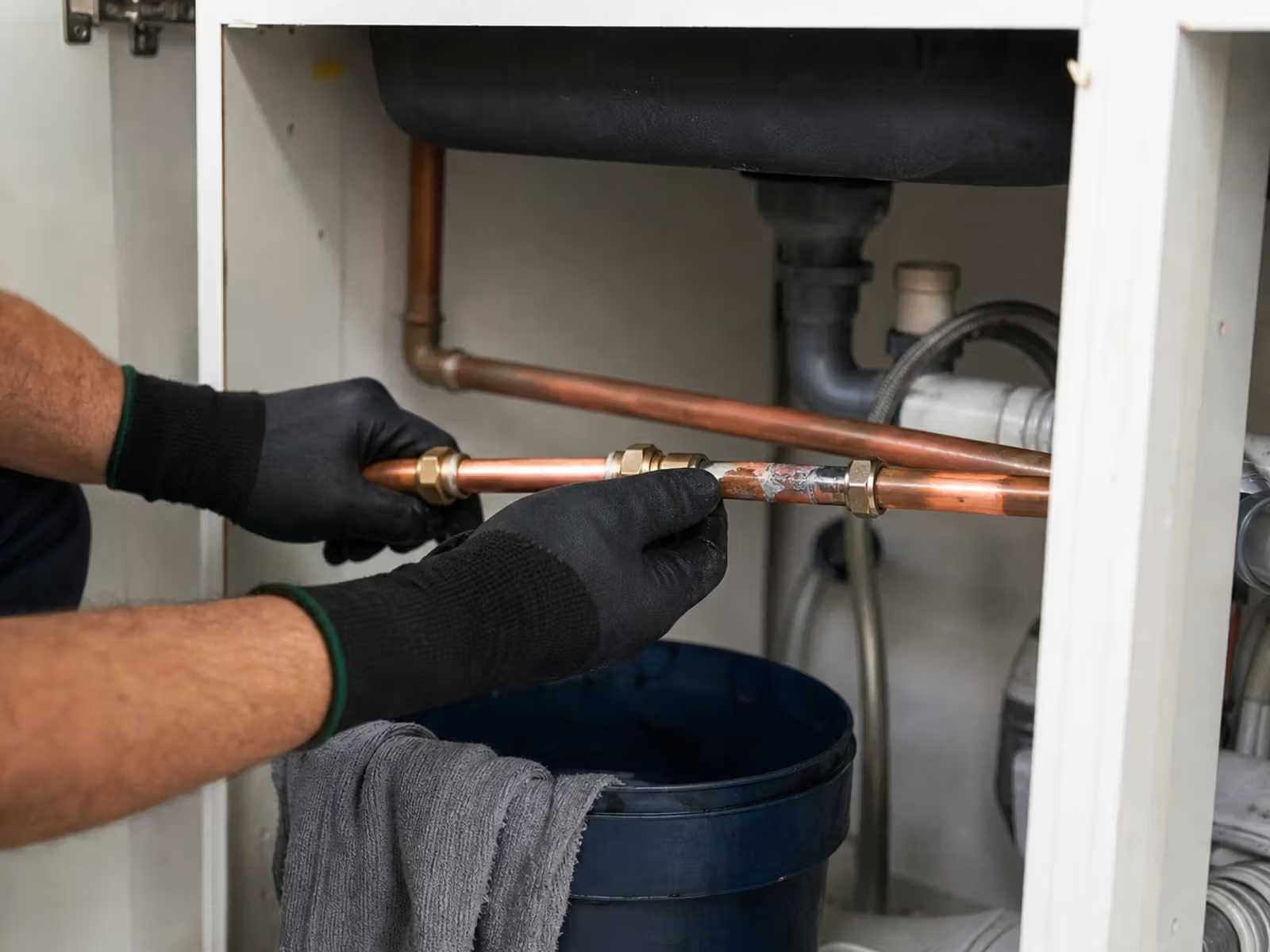
A smelly kitchen sink with no blockage usually means sewer gas is getting past the water seal in the trap. Water still drains, so the clog is not the cause.
- A dry trap, where the water seal has evaporated
- A film of old food residue coating the inside of the waste pipe
- A vent that is not letting air in behind the water
- A crack, sag or root in the waste pipe
- A loose joint under the sink
Check the trap first. If the smell stays, the fault is usually out of sight.
Why a smell can come back when the water drains fine
Out of sight usually means one of two things. Either the trap under the sink has dried out, or old food residue is coating the inside of the pipe. The water still runs away. The smell just rides up past it.
The trap is the U-shaped bend under your sink. It holds a small plug of water and that water blocks sewer gas from drifting back into the kitchen. In a far-south home that sits empty for a few weeks, say a Fish Hoek holiday house between visits, that water slowly evaporates. Once the bend is dry, the seal is gone and the smell comes straight up.
Food residue is the other common cause. Grease, coffee grounds and bits of food build a thin film inside the waste pipe. The drain still clears, but the film sits there and turns sour. Run the tap for about 30 seconds. If the smell comes back after that, the problem is not loose food in the sink, so the trap is the first place to look.
Check the trap and the seal first
- Run the hot tap for about 30 seconds, then wait a minute and smell again. A dry trap often refills on its own once water flows through it.
- Open the cupboard under the sink and find the U-bend. Look for a damp patch, a drip or a white crust where the pipe joins fit together.
- Feel the connections at each end of the trap with your hand. A loose nut or a cracked seal lets gas escape even when the water drains fine.
- Pour a kettle of hot water slowly down the drain to melt light grease sitting in the bend.
- Wait a few hours, then smell again. If the kitchen is clear, the trap was the cause and you are done.
When a smell points to venting or the waste pipe
Cleared the trap and the smell lingers? Then the fault sits deeper. It hides in the venting or the waste pipe itself. You cannot see these parts from the cupboard, which is what makes them harder to pin down.
Every drain needs a vent pipe. It lets air in behind the water. Without that air, draining water pulls the water right out of your trap. It works like sucking a straw empty. The seal breaks. Sewer gas drifts up. You often hear it before you smell it: a gurgle from the plughole when another drain runs.
The waste pipe is the other hidden culprit. In older far-south homes, clay sewer lines and years of grease cause most of the trouble. A crack, a sag or a root pushing through the pipe wall traps waste. That waste rots and smells long before it ever blocks. A kettle of hot water will not reach these faults. Guessing where the fault sits usually costs more than finding out for certain. The pages at blocked-drains walk through what a slow or smelly drain is actually telling you.
When to call a registered plumber and what to expect
A lingering smell points past the trap. Once you have checked the trap, call a registered plumber. If the smell still hangs around, the next causes sit out of reach. At that point, the honest move is to see the pipe, not guess. Our Drain Camera Check does exactly that. Lwazi feeds a camera from the nearest access point down to the municipal connection. He records the whole run. You get the video and a short written note on what we found: roots, a crack, a sag or a clean pipe.
You are right to worry about the bill. A tenant in Lakeside might spot the smell and tell the landlord. The landlord then calls us in on their behalf. None of them is standing in the kitchen when the invoice lands. That is why any repair is quoted separately before we start. You see what is wrong on the screen first. Then you decide.
If the camera finds a block, Blocked drain clearing is the service that follows. The aim stays the same throughout. Check first, work tidy and tell you what we see before you spend a cent on a repair. For wider background, see Prevent blocked sewers (City of Cape Town).
Frequently asked questions

What do plumbers recommend for smelly drains?
Plumbers usually start with the trap, then work outward. They check that water still sits in the bend, that the joints are tight and that the vent lets air in. If the smell stays after that, they look inside the pipe with a camera instead of guessing.
What can I put down my sink drain to stop it from smelling?
Nothing poured down the sink fixes a sewer smell at its source. Hot water run after a meal helps keep light grease moving. Harsh chemical cleaners can wear down old pipes and do little for a gas leak past the trap. Keep oil, scraps and coffee grounds out of the sink in the first place.
Why should you never use baking soda and vinegar to unclog a drain?
The bubbling feels like progress, yet the mix rarely shifts the sort of build-up that causes a smell. It cannot refill a dry trap, close a loose joint or reach a crack in the pipe. Save it for a light clean and check the trap before you reach for it.
Will I be overcharged for something simple, like a tap or small repair?
Every quote lists the work it covers, so you can check what the price includes. A worn tap washer and a cracked pipe connection need very different work. Ask for a written quote before any work starts. Send a photo of the fault to get a quote before you agree to anything.
Will I be hit with an inflated invoice for work that doesn't even solve the problem?
You can protect yourself by agreeing on a written quote before the plumber starts. Check that the invoice lists the same items and the same amount. Ask what the work fixed and whether the smell has gone before you pay. A clear explanation of the fault, given before the work starts, makes a fair invoice easier to judge.
Will they actually turn up when they say they will, or will I be left waiting and chasing them?
A booked time is only as good as the confirmation behind it. Ask for the arrival window in writing and keep the message thread as your record. Ask how the plumber will let you know if they are running late. Then you have a clear promise to hold them to, rather than a phone call you have to chase.
Explore more
-
Understand blocked drains before you reach for a plunger
What a slow drain is really telling you, and what stops it coming back
Ready When You Are
For more on this, see Blocked drains. If you would like to take this further, Blocked drain clearing is the place to start.
About the author
Related articles
-
What can you pour down the toilet to unclog it
What can you pour down the toilet to unclog it from Klipspringer Plumbing in Cape Town. Straight answers, clear pricing on request and a team you can actually
Read the guide -
Will a blocked drain clear by itself
Will a blocked drain clear by itself? Not always and waiting can mean water in the cupboard below instead. Here's what to watch for before that happens.
Read the guide -
Why plumbers never pour baking soda and vinegar down a drain
Poured the vinegar and soda and watched it fizz, not fix? Here's why plumbers never pour baking soda and vinegar down a drain and what a slow drain really
Read the guide